
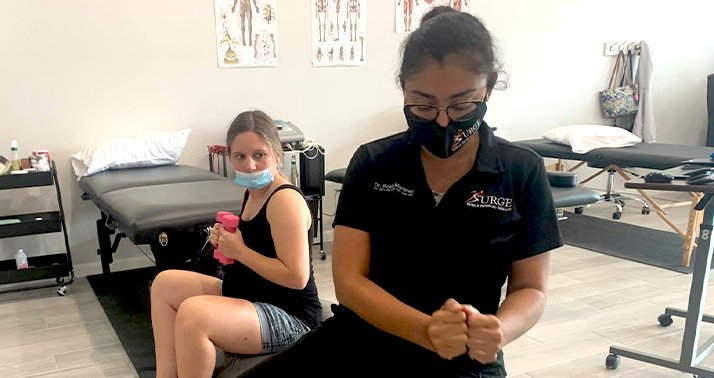
A common question we get asked at Surge Mobile Physical Therapy is “How can you tell if it is working?!” Our Physical Therapy Port Isabel therapists have the answer for you!
Physical therapy can help you recover from an injury, a surgery, or chronic pain. Unless you are in a severe amount of pain, it might be hard to tell if physical therapy is working. If you want to know if physical therapy is working for you and whether or not it’s worth it, there are some subtle signs of improvement that you can look for.
In this blog, we will explore 7 signs that your physical therapy treatment is effective.
1. Reduced swelling
As part of your physical therapy, you may notice that the swelling in your injured area has lessened over time. The exercises that are part of physical therapy can help reduce inflammation and allow lymphatic fluid to drain out, which may help your swelling go down.
2. Less frequent pain
Your pain is less frequent, and you can go for longer stretches without experiencing pain. This is a positive sign of progress as you continue to strengthen your body.
3. Less intense pain
Pain can often be felt at the same times of day, but it may be less intense than in the past. As you work through physical therapy, you may notice that your pain is less sharp or is only rated at a mild level of discomfort compared to when it was rated at an agonizing 10 on the pain scale. Even though your pain persists, that’s still significant progress!
4. You can do more reps
If you’re working on your exercises at home or with your physical therapist, you may find that over time you can do more repetitions of some or all of your typical exercises. You may even be able to increase the difficulty of your exercises.
5. Exercises feel easier or hurt less
As you continue to exercise, you may notice that it feels easier and less painful. With time, the exercises that you do each day will feel more natural and less exhaustive.
6. Greater range of motion
Patients undergoing physical therapy can experience an increase in the range of motion of their injured body parts. For example, they might be able to bend their knee farther or rotate their shoulder more fully than before starting therapy.
7. Less fear or anxiety
Soon after an injury or surgery, patients often become afraid to move because of pain. They avoid physical therapy exercises and other aspects of their daily routine because they’re afraid it will hurt. As therapy progresses, however, they may realize that their fear of movement is lessening or disappearing altogether as they regain confidence in their abilities.
Make Progress at Surge Mobile Physical Therapy
If you’re interested in experiencing the benefits of physical therapy, we invite you to consider Surge Mobile Physical Therapy.
If you have any questions feel free to call (956) 254-0409 or contact us today to schedule a consultation and evaluation.
Physical Therapy Port Isabel Directions
Here’s a convenient map to get directions to Surge Mobile Physical Therapy in Port Isabel from a number of popular roadways.